Introduction
You’re posting consistently.
Your views are growing.
People are liking and sharing your content.
But there’s one big problem…
Nobody is buying.
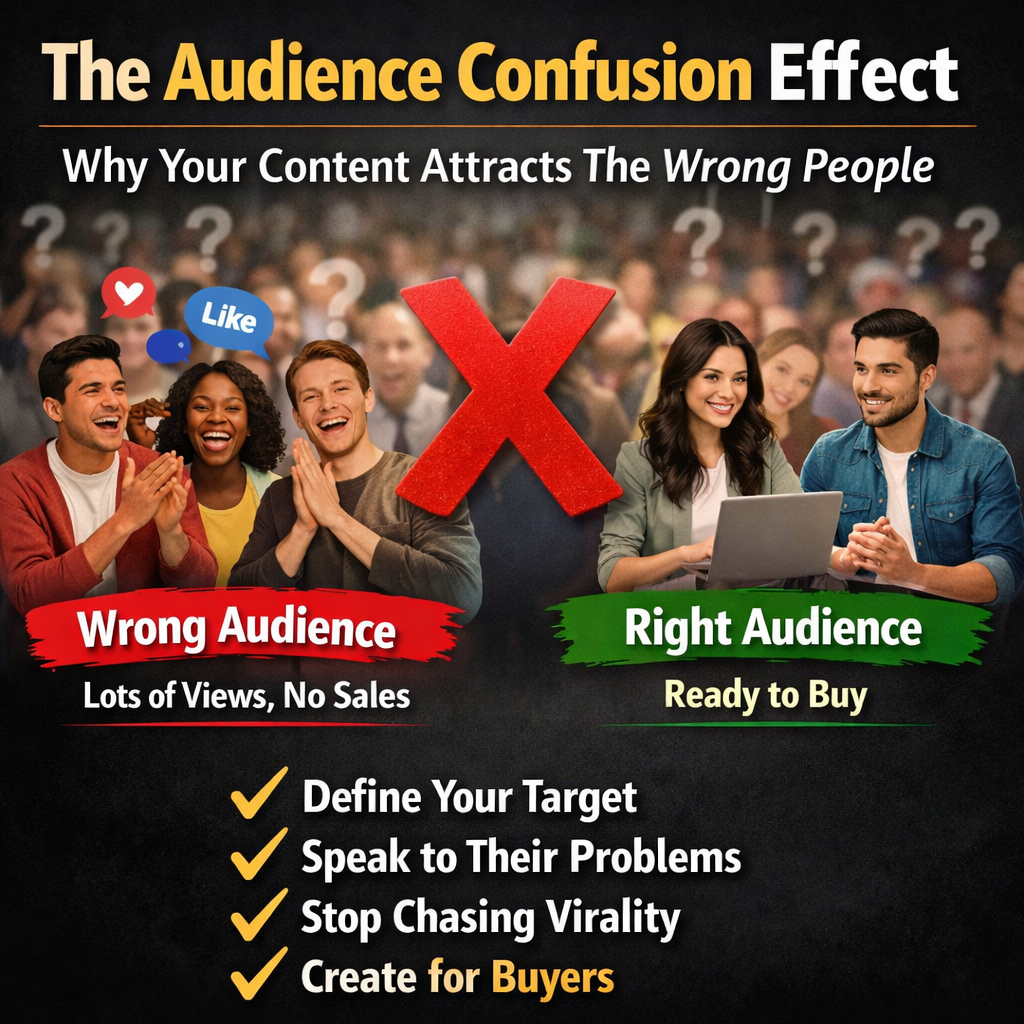
This is what I call The Audience Confusion Effect when your content attracts attention, but from the wrong people.
If you don’t fix this, you’ll keep growing an audience that claps for you but never pays you.
Let’s break it down and fix it.
The Problem: You’re Getting Views From People Who Will Never Buy
Most creators think:
“More views = more money”
But that’s not true.
You can have:
10,000 followers who never buy
Or 1,000 followers who trust you and pay you
The difference is who you are attracting.
Here’s why this happens:
1. You’re Talking to Everyone
When your content is too general:
Beginners don’t feel guided
Advanced people don’t feel challenged
Buyers don’t feel convinced
So nobody takes action.
2. You’re Chasing Virality Instead of Value
Viral content often:
Attracts random people
Focuses on entertainment
Lacks depth
This leads to the exact problem explained in my post on The Skill Gap Crisis: Why Your Content Is Good But Not Valuable Enough.
http://The Skill Gap Crisis: Why Your Content Is Good But Not Valuable Enough.
3. Your Content Has No Clear Direction
If people don’t know:
Who you help
What you solve
What you sell
They won’t take you seriously.
This connects directly to The Invisible Offer Problem: Why Nobody Knows What You’re Selling.
The Truth You Need to Accept
Not everyone is your audience.
And trying to please everyone will:
Confuse your message
Attract the wrong people
Kill your income
The Solution: Fix the Audience Confusion Effect
Let’s make this practical and actionable.
1. Define a Clear Target Audience
You need to answer this clearly:
👉 Who exactly am I helping?
Not:
“Everyone”
“Content creators”
But something like:
Beginner TikTok creators who want to make money
Small business owners struggling to get customers online
People who want to turn content into income
Be specific.
When you narrow your audience:
Your message becomes stronger
Your content becomes clearer
Your results improve
2. Speak Directly to Their Problems
Your content should feel like this:
“This person understands me.”
Instead of saying:
“Here are content tips…”
Say:
“If you’re posting every day but not making money, this is why…”
That level of clarity builds:
Trust
Authority
Connection
And it solves the issue explained in The Attention-to-Income Gap: Why Viral Videos Don’t Translate to Money.http://The Attention-to-Income Gap: Why Viral Videos Don’t Translate to Money.
3. Stop Trying to “Go Viral” for Everyone
Virality is not the goal.
Relevance is.
When you try to go viral:
You dilute your message
You attract random people
You lose your ideal buyers
Instead:
Create content that speaks to a specific group
Solve real problems
Focus on transformation, not just attention
4. Align Your Content With Your Offer
Every post should lead somewhere.
Ask yourself:
Does this content attract people who can buy from me?
Does it relate to what I sell?
If not, you’re building an audience… but not a business.
5. Use Clear Messaging in Every Post
Your audience should quickly understand:
Who you help
What problem you solve
What result you offer
Don’t make people guess.
Clarity = conversions.
Real Example (Simple Breakdown)
❌ Wrong Approach:
Posting random motivation, trends, and general advice
Result:
Mixed audience, low sales
✅ Right Approach:
Posting content like:
“How to turn TikTok views into sales”
“Why your followers are not buying”
“Simple offer you can start today”
Result:
Focused audience, higher conversions
Key Takeaways
Views don’t matter if they don’t convert
Not everyone is your audience
Clarity beats virality
Specific content attracts serious buyers
Conclusion
The Audience Confusion Effect is dangerous because it looks like success.
You see views.
You see engagement.
But behind the scenes, your business is not growing.
Fix this by:
Defining your audience
Speaking to real problems
Creating content with purpose
Because at the end of the day…
It’s not about how many people watch you.
It’s about how many people trust you enough to buy.