
Introduction
Creating a product without knowing if people will buy it is one of the fastest ways to waste time and money.
Many creators build ebooks, courses, or services based on assumptions… and end up with zero sales.
If you want to avoid that mistake, you must first understand what your audience will pay for.
This guide will show you practical, proven steps to identify profitable ideas before you create anything so every effort you make moves you closer to income.
What Your Audience Will Pay For (Simple Truth)
Let’s make this clear:
👉 People don’t pay for content.
👉 People pay for solutions to real problems.
Your audience will only spend money when:
They are struggling with something important
They want faster results
They feel stuck or confused
They believe your solution will help them
This is why many creators fail—they focus on content people enjoy, not problems people will pay to solve.
If you’re struggling with this, read:
👉 The Hidden Psychology Behind Why People Watch Your Content But Don’t Buy
http://The Hidden Psychology Behind Why People Watch Your Content But Don’t Buy
Why Identifying What Your Audience Will Pay For Is Important
Before creating any product, validation is key.
When you correctly identify what your audience will pay for, you:
Avoid wasting time on ideas that won’t sell
Create offers people already want
Increase your chances of making sales quickly
Build a business, not just an audience
Step-by-Step: How to Identify What Your Audience Will Pay For
1. Listen to Your Audience Carefully
Your audience is already giving you clues every day.
Check:
Comments on your posts
Direct messages (DMs)
Questions during conversations
Social media discussions
Look for repeated problems.
Example phrases:
“How do I start?”
“I’ve tried this but it’s not working”
“I don’t understand this part”
👉 These are strong indicators of what your audience will pay for.
2. Focus on Painful Problems
Not all problems are equal.
People only pay for problems that are:
Urgent
Frustrating
Costly
Blocking their progress
Example:
❌ “Business ideas”
✅ “How to start a soap business in Nigeria with low capital”
The more specific and painful the problem, the higher the chance people will pay.
3. Find Where People Are Stuck
Your audience doesn’t need everything.
They need help at the exact point they are stuck.
Ask yourself:
What is confusing them right now?
What is slowing them down?
What mistakes are they making?
👉 That “stuck point” is where your opportunity is.
4. Research What Already Sells
If people are already paying for something similar, that’s a good sign.
Look at:
Online courses
Digital products
Services in your niche
This helps you confirm what your audience will pay for without guessing.
For deeper understanding, read:
👉 How to Package Your Knowledge Into a Simple Offer (Even If You’re Not an Expert Yet)
http://How to Package Your Knowledge Into a Simple Offer (Even If You’re Not an Expert Yet)
5. Test Your Idea Before Creating It
This is the most important step.
Before building anything, test demand.
You can do this by:
Posting content around the idea
Asking your audience directly
Running a simple poll
Saying: “DM me if you’re interested”
Offering a pre-sale
If people show interest…
👉 You’ve confirmed what your audience will pay for.
6. Create a Simple, Focused Offer
Don’t overcomplicate your product.
Start with something simple:
A short guide (PDF)
A mini course
A WhatsApp class
A one-on-one session
Solve one specific problem clearly.
How to Know If Your Idea Will Sell
Before creating your product, check:
Are people already asking for this?
Does it solve a real and painful problem?
Can it save time or reduce stress?
Are others already selling something similar?
If the answer is yes, you’ve likely found what your audience will pay for.
Common Mistakes to Avoid
1. Creating Without Validation
Never create first and hope people will buy later.
Always validate demand first.
2. Focusing Only on Free Content
Free content builds attention—but not income.
If you give everything away, people won’t see a reason to pay.
Learn more here:
👉 Why Free Content Alone Will Keep You Broke (And What to Do Instead)
http://Why Free Content Alone Will Keep You Broke (And What to Do Instead)
3. Being Too Broad
Broad offers don’t sell.
Specific solutions do.
4. Ignoring Feedback
If your audience keeps asking the same questions, pay attention.
That’s where your opportunity is.
Practical Example (Nigeria Context)
Let’s say you’re teaching business.
Instead of creating:
❌ “Business Masterclass”
You create:
✅ “How to Start a Profitable Soap Business in Nigeria with ₦50,000”
Then you test it by:
Sharing small tips
Asking for interested people
Collecting feedback
👉 This is how you confirm what your audience will pay for before building anything.
If you want to succeed as a creator or business owner, you must stop guessing.
👉 Focus on identifying what your audience will pay for first.
Remember:
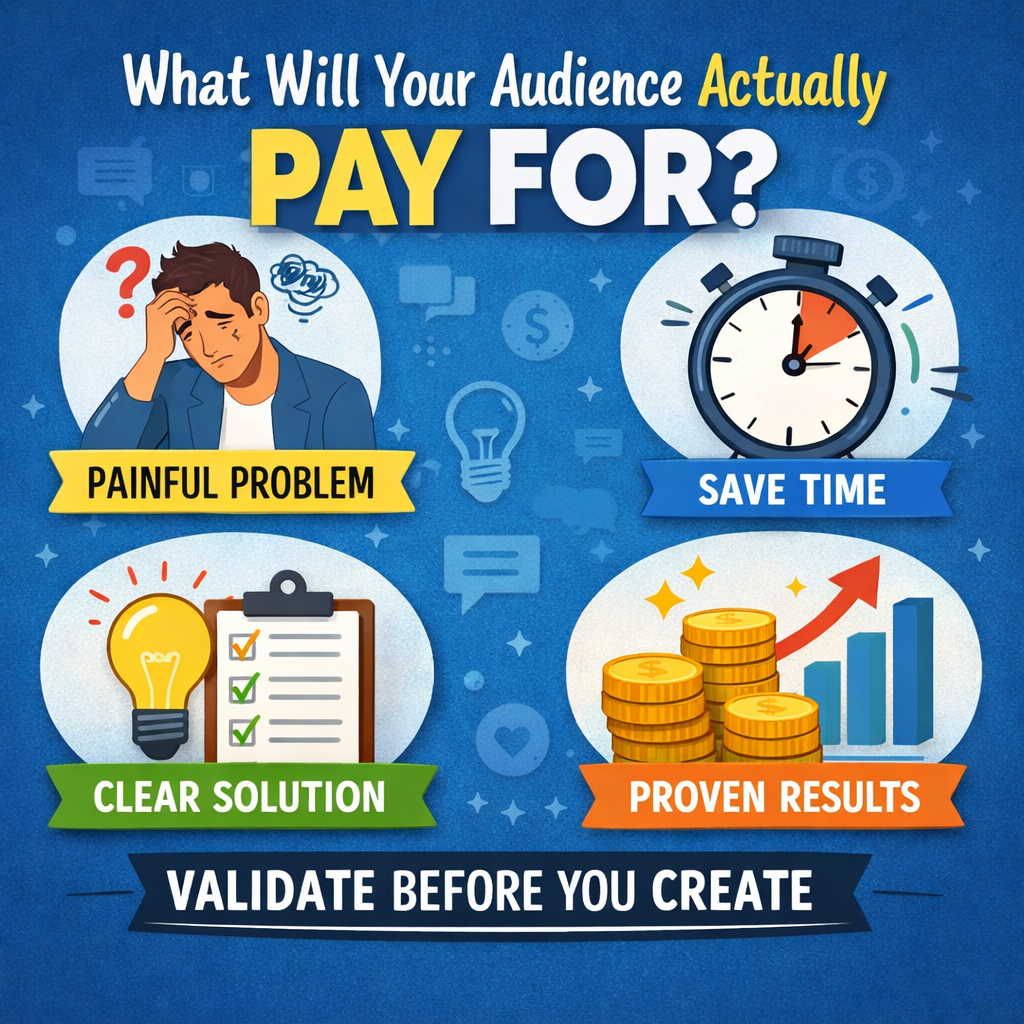
Listen to your audience
Focus on real problems
Validate before creating
Start simple
That’s how you move from content creation to real income.
FAQ (For SEO Optimisation)
What does “what your audience will pay for” mean?
It means identifying problems your audience is willing to spend money to solve—not just topics they enjoy consuming.
How do I know if people will pay for my idea?
Test it first by asking your audience, posting about it, or offering a pre-sale. If people show interest, it’s a good sign.
Why do people engage but not buy?
Because engagement is based on interest, while buying is based on solving a real problem.
Can beginners identify what their audience will pay for?
Yes. By listening to questions, observing problems, and testing ideas, even beginners can find profitable opportunities.